
Jul 21, 2026
If a generator mostly sits on standby, how do you know it will deliver full power when the grid fails? The answer is load-bank testing. Here's what a load bank is and why your generator needs it.
What is a load bank?
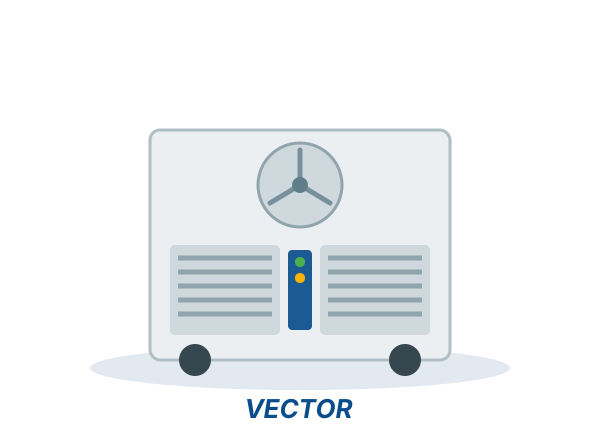
A load bank applies an artificial electrical load to a generator so it can be tested at — or near — its full rated capacity, without needing real equipment connected.
Resistive vs reactive load banks
- Resistive — simulates real-power (kW) loads like heaters and lighting
- Reactive — adds inductive (kVAR) load to mimic motors, for a truer test at the rated power factor
Why load testing matters
- Proves the generator can carry its rated load
- Prevents and clears wet-stacking from long under-loaded running
- Commissions new installations before go-live
- Required for many data centers, hospitals and critical facilities
When should you load test?
At commissioning, then periodically — especially for standby sets that rarely run at full load. Data centers often test annually or more.
Vector supplies and rents resistive and reactive load banks from 50 kW to 3000 kW across the UAE. Book a load test.